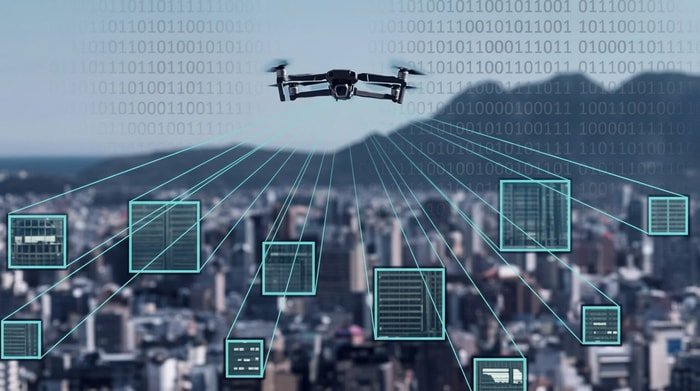
The commercial drone revolution has created a new and complex security challenge for facilities across Egypt. What was once a niche hobbyist technology is now an accessible, capable tool that can be used for industrial espionage, unauthorized surveillance, contraband delivery, and even physical attacks. For security directors in Cairo, Alexandria, and across the nation, the question is no longer whether drones pose a threat—but how to detect, assess, and respond to them effectively within Egypt's evolving regulatory framework.
This comprehensive guide examines the drone threat landscape in Egypt, the technology available for counter-UAS operations, the critical legal considerations for Egyptian facilities, and a practical roadmap for building an effective airspace security program.
1. Understanding the Drone Threat in Egypt
Drones have become democratized tools with powerful sensors and AI-driven data extraction capabilities [citation:7]. For Egyptian facilities, the threat spectrum spans from accidental incursions by recreational users to deliberate industrial espionage operations.
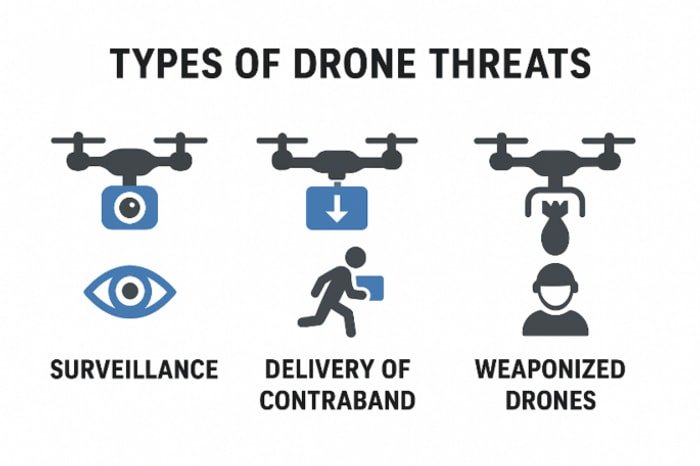
Primary Threat Categories:
- Industrial Espionage: Drones equipped with high-resolution cameras and AI can capture enough visual data to reconstruct prototypes, production processes, or proprietary designs [citation:7].
- Contraband Delivery: Unauthorized payload delivery into secure facilities, including prisons, industrial zones, and compounds.
- Signal Intelligence: Drones can intercept wireless communications and perform network reconnaissance.
- Physical Attack: Weaponized or kamikaze drones targeting critical infrastructure [citation:1].
- Privacy Violation: Unauthorized observation of VIP movements, executive offices, or residential compounds.
Why Traditional Security Falls Short:
- Drones approach from angles that ground-based cameras are not designed to monitor [citation:7].
- Many drones fly silently and move quickly, evading visual detection.
- Satellite communication and 5G control allow drones to be operated from remote locations, making pilot identification difficult [citation:7].
- Legal restrictions limit what facility security personnel can legally do in response to drone intrusions [citation:1][citation:3].
The ASIS International framework emphasizes that drone defense requires a dedicated, multi-layered approach integrated into existing security operations [citation:16].
2. Drone Regulations in Egypt: What Security Directors Must Know
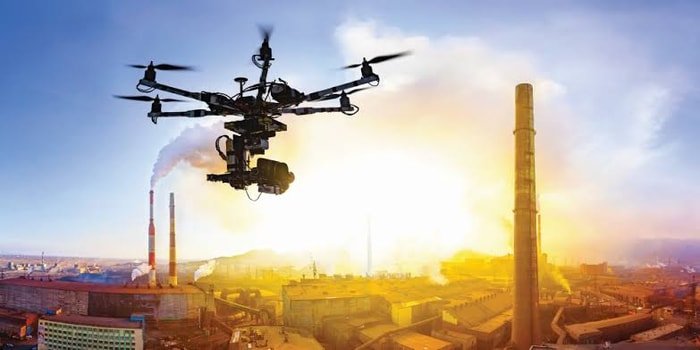
Egypt's drone regulatory environment remains restrictive, with the Ministry of Defense serving as the primary permit authority for drone operations [citation:3]. This creates a complex compliance landscape for security providers and facility operators.
Key Regulatory Considerations:
- Permit Authority: The Ministry of Defense currently oversees drone permits, with coordination needed from civil aviation and communications authorities [citation:3].
- Geofencing Requirements: Regulators are expected to enforce geofencing for critical sites including military bases, presidential palaces, power plants, and border areas [citation:3].
- Mitigation Authority: The legal authority to deploy countermeasures (jamming, spoofing, neutralization) remains strictly controlled, typically reserved for law enforcement and security services [citation:1][citation:3].
- Private Facility Limitations: Private security companies cannot independently deploy active countermeasures without explicit legal authorization.
The regulatory gap between technology capability and legal authority is a critical challenge for Egyptian security directors [citation:1].
3. Counter-UAS Technology: Detection, Identification, and Response
Effective drone defense requires a layered approach combining multiple sensor technologies. No single sensor can provide reliable detection and tracking for all drone types and scenarios [citation:1].
Detection Technologies:
- RF Detection: Identifies radio-frequency communication between drone and operator, locating both device and pilot [citation:7].
- Radar: Detects flying objects even in low visibility; compact radar systems are available for facility protection [citation:1].
- Acoustic Sensors: Detect specific sound frequencies generated by drone motors [citation:7].
- Electro-Optical/Infrared: Visual identification and classification once a potential threat is detected [citation:2].
- AI Sensor Fusion: Combines multiple sensor inputs into a unified track, reducing false positives and improving identification accuracy [citation:12].
4. Building a Drone Emergency Response Plan (DERP)
The ASIS International framework outlines a three-step methodology for establishing airspace security: (1) Drone Vulnerability and Risk Assessment (DVRA), (2) Training on detection and mitigation technologies, and (3) Drone Emergency Response Plan (DERP) [citation:16].
DERP Essential Components:
- Incident Classification Matrix: Define threat levels (nuisance, suspicious, hostile) and corresponding response protocols.
- Detection-to-Response Workflow: Clear procedures for alert validation, escalation, and notification.
- Law Enforcement Interface: Pre-established communication channels and protocols for involving authorities [citation:1].
- Evidence Capture: Procedures for documenting drone incidents for investigation and legal purposes.
- Staff Training: All personnel should know basic drone threat awareness; security staff require advanced CUAS operator training [citation:1].
- Regular Drills: Quarterly tabletop and live exercises to test response effectiveness.
Conclusion: The Air Domain is the New Security Perimeter
As drone technology continues to advance and become more accessible, Egyptian facilities must adapt their security strategies to address the air domain. The convergence of detection technology, AI-powered analytics, and regulatory frameworks is creating new possibilities—and new responsibilities—for security professionals.
At EGY Blanco Security, we help Egyptian businesses assess drone vulnerabilities and develop comprehensive airspace security strategies. Contact us for a drone vulnerability assessment.
2026 Drone Security Checklist for Egyptian Facilities:
- Conduct a Drone Vulnerability and Risk Assessment (DVRA) [citation:16].
- Identify critical assets vulnerable to aerial observation or attack.
- Deploy layered detection (RF, radar, optical) based on site risk profile [citation:1].
- Establish clear legal boundaries for response actions [citation:1].
- Develop and test a Drone Emergency Response Plan [citation:16].
- Train security staff on drone threat awareness and reporting.
Secure your airspace—contact EGY Blanco Security today for a drone security assessment.


