Ports and logistics zones represent the lifeblood of the Egyptian economy. From the Suez Canal through which nearly 12% of global trade passes, to Sokhna Port undergoing massive expansion, and the historic Alexandria Port—these critical facilities require exceptional security. According to the Suez Canal Authority, the canal achieved record revenues in 2025-2026, making its protection a national security priority. This comprehensive guide provides an integrated vision for securing this vital sector.
1. Container Terminal Security: The Beating Heart of the Port
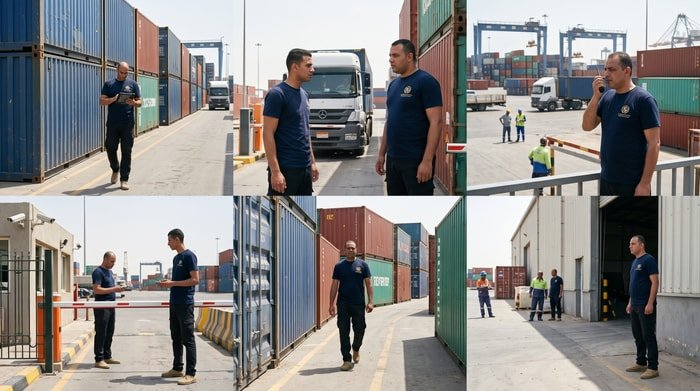
Container terminals are the most vital and complex areas in any port. Here, thousands of containers move daily, carrying goods worth millions of dollars. The security challenge lies in monitoring container movement from arrival to departure, while preventing tampering or unauthorized access. These terminals require an integrated security system including: high-definition surveillance cameras covering every angle, strict access control systems for staff and visitors, and round-the-clock mobile security patrols. Data from the International Maritime Organization (IMO) indicates that ports implementing integrated security systems reduce theft and tampering incidents by up to 70%.
2. Anti-Smuggling and Cargo Tampering Prevention: A Hidden Enemy
Smuggling and container tampering are among the most serious threats facing Egyptian ports. Common methods include: tampering with container seals, hiding illegal goods within legitimate shipments, and falsifying customs documents. Combating these threats requires close cooperation between private security and official authorities. We recommend implementing smart electronic seal systems that record any attempt to open or tamper, with immediate alarm systems upon detecting suspicious activity. Static guards also play a pivotal role at inspection and sorting points, conducting thorough document verification and matching them with actual goods.
3. Transit Cargo Protection: Responsibility Beyond Borders
Transit cargo—goods passing through Egypt en route to other destinations—presents a special challenge. These goods sometimes do not undergo full inspection, making them potential targets for tampering. They require continuous tracking from the moment they enter Egyptian territorial waters until departure. Learn more from our freight transport security guide. We also recommend coordination with the Suez Canal Economic Zone to ensure all parties adhere to security protocols.
4. Cybersecurity for Port Management Systems: The Invisible Threat
In the era of smart ports, container management systems, automated cranes, and tracking devices are all internet-connected. Any breach can paralyze the entire port or manipulate shipment data. European Union Agency for Cybersecurity (ENISA) reports indicate cyberattacks on ports have increased by 45% since 2023. Cybersecurity must be an integral part of the comprehensive security plan, protecting port management systems at the same level as physical security. See our cybersecurity guide for deeper understanding.
5. Customs Zone and Warehouse Security: Where Goods Await Their Fate
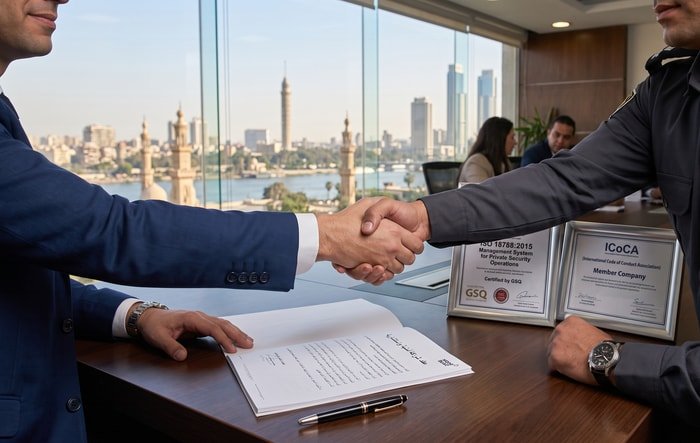
Customs zones and port warehouses are sensitive stopover points. Goods here may remain for days or weeks awaiting customs clearance, making them vulnerable to theft or tampering. These areas require double security: permanent physical guarding with 24/7 electronic surveillance systems. A mandatory periodic inventory system must also be implemented in cooperation with customs management, documenting every entry or exit movement. Expertise in security contract drafting is essential here to clearly define responsibilities.
6. Emergency Plan in Logistics Zones: Preparedness That Cannot Wait
Ports face unique risks: container fires, chemical spills, maritime accidents, and even natural disasters. The emergency plan must include: rapid response teams trained to handle fires and spills, designated evacuation points, and emergency communication protocols with Civil Defense. Our emergency response teams provide practical expertise in crisis management.
7. Physical-Cyber Security Integration: A Unified Vision
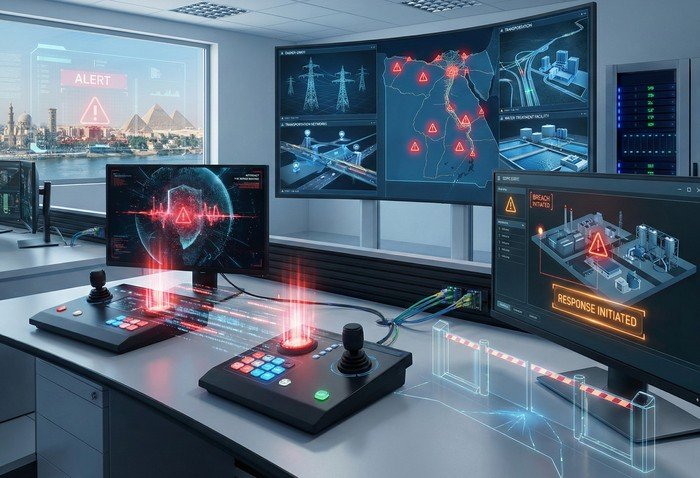
Ultimately, physical and cyber security in ports cannot be separated. Guarding the gate is insufficient if an attacker can breach the container management system from outside. We recommend building a unified security command center integrating data from all systems—surveillance cameras, sensors, tracking systems, and access logs—into a single dashboard. This integration enables early threat detection and coordinated response. Our sensitive security operations management provides the expertise needed to build such centers.
Port Security Checklist: 10 Critical Points
- Complete surveillance camera coverage of all port areas
- Strict access control systems for staff and visitors
- Smart electronic seals on all containers
- Round-the-clock mobile security patrols
- Real-time tracking for transit cargo
- Cyber protection for port management systems
- Mandatory periodic inventory for customs zones
- Updated and drilled emergency plan
- Continuous coordination with official authorities
- Unified security command center for data
Port and logistics zone security is not just a budget item—it is an investment in national economic stability. A secure port means continuous trade flow, international confidence, and protection of billions of dollars. At EGY Blanco Security, we provide integrated security solutions for ports and logistics zones combining deep field expertise with advanced technology. Contact us today for a comprehensive security assessment of your logistics facility.