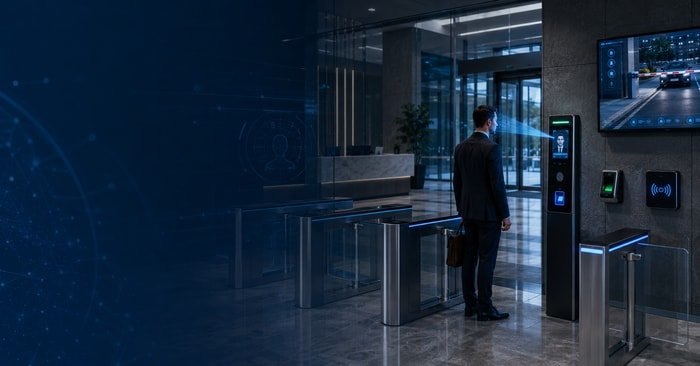
Biometric technology is transforming physical access control across Egypt. What was once the domain of high-security government facilities is now becoming standard practice for corporate offices, residential compounds, healthcare facilities, and educational institutions. The global biometric physical access control market is projected to generate over $16.31 billion in revenue by 2031, with face biometrics emerging as the dominant modality in emerging markets [citation:5][citation:10].
This guide examines the biometric modalities available for physical access control, the unique considerations for Egyptian facilities, the regulatory landscape under Egypt's Personal Data Protection Law, and a practical framework for evaluating and implementing biometric access control.
1. Why Biometrics Are Replacing Cards and Passwords
Traditional access control methods—magnetic cards, PIN codes, keys—share a fundamental weakness: they authenticate something a person has or knows, not who they are. Cards can be lost, stolen, or lent. Passwords can be shared, guessed, or forgotten [citation:5].
Key Drivers of Biometric Adoption:
- Identity Assurance: Biometrics verify the actual person, not a credential that can be transferred [citation:5].
- Contactless Convenience: Face and palm recognition offer frictionless entry without physical contact [citation:10][citation:20].
- Tailgating Prevention: Face biometric systems can detect and alert on tailgating attempts [citation:5].
- Operational Efficiency: Faster throughput and reduced administrative overhead for credential management.
- Strong Second Factor: Card + biometric combinations enhance security for high-risk areas [citation:5].
Market Validation:
- Global BIOPACS revenue forecast: $16.31 billion by 2031 [citation:5].
- Over 1.5 billion users expected by 2031 [citation:5].
- Face biometrics dominant in APAC and LATAM emerging markets; similar trajectory expected in MENA [citation:10].
- Touchless access control market growing at 8.2% CAGR (2026-2033) [citation:20].
2. Biometric Modalities: Which Technology Fits Your Facility?
Each biometric modality has distinct characteristics suited to different environments and risk profiles [citation:5].
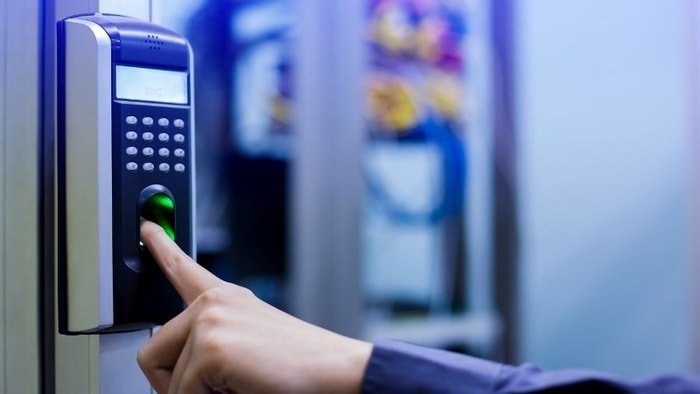
Modality Comparison:
- Fingerprint: Mature, cost-effective, widely deployed. Best for indoor controlled environments. Contact-based limitations post-COVID [citation:10].
- Face Recognition: Contactless, high throughput, increasingly accurate. Dominant trend in emerging markets [citation:10]. Works in varied lighting with AI enhancement.
- Iris Recognition: Highest accuracy, works with masks/PPE. Higher cost, requires user cooperation. Best for critical areas.
- Palm/Finger-Vein: Emerging modality, contactless, difficult to spoof. Growing adoption in healthcare and finance [citation:5].
3. Egypt's Regulatory Landscape: PDPL and Biometric Data
Egypt's Personal Data Protection Law (Law No. 151 of 2020) classifies biometric data as sensitive personal data, imposing strict requirements on collection, processing, and storage. Facilities deploying biometric access control must ensure compliance.
PDPL Compliance Requirements:
- Explicit Consent: Individuals must provide informed consent for biometric data collection.
- Data Minimization: Collect only what is necessary; store templates rather than raw biometric images where possible.
- Security Safeguards: Encryption, access controls, and audit trails for biometric databases.
- Retention Limits: Define and enforce data retention periods.
- Data Subject Rights: Procedures for access, correction, and deletion requests.
Egypt's National Biometric Initiatives:
Egypt has launched national biometric verification infrastructure, including face biometric verification for mobile services through the MOIEG-PASS platform [citation:19]. This national context demonstrates government commitment to biometric security while establishing standards that private facilities can align with.
The National Telecommunications Regulatory Authority (NTRA), in coordination with the Ministry of Interior, has developed a secure biometric verification system where citizen data remains with government authorities—mobile operators verify but do not store biometric data [citation:14]. This model of "verification without data custody" offers a template for private facility deployments.
4. Integration Strategy: From Legacy Systems to Biometric Access
Most Egyptian facilities have existing access control systems—card readers, intercoms, turnstiles. A phased integration approach minimizes disruption and maximizes ROI.
Implementation Roadmap:
- Phase 1 — Assessment: Audit existing access points, user populations, and security requirements.
- Phase 2 — Pilot: Deploy biometric readers at 1-2 entry points to test user acceptance and system performance.
- Phase 3 — Hybrid Mode: Run biometric + card in parallel for transition period.
- Phase 4 — Full Deployment: Scale across all access points; decommission legacy credentials as appropriate.
- Phase 5 — Optimization: Analyze usage data, tune thresholds, expand to additional applications (time & attendance, visitor management).
Conclusion: Biometrics as a Security Foundation
Biometric access control represents a fundamental shift in how facilities verify identity and manage physical security. For Egyptian organizations, the technology offers enhanced security, improved user experience, and operational efficiency—but requires careful attention to regulatory compliance and integration planning.
At EGY Blanco Security, we help Egyptian facilities evaluate and implement biometric access control solutions aligned with PDPL requirements and operational needs. Contact us for a biometric readiness assessment.
2026 Biometric Access Control Checklist for Egyptian Facilities:
- Define use cases and risk levels for each access point.
- Select biometric modality based on environment and user population.
- Ensure PDPL compliance for biometric data handling [citation:19].
- Plan phased integration with existing access control systems.
- Train security staff on biometric system operation and privacy protocols.
- Establish data retention and deletion policies.
Ready to modernize your access control? Contact EGY Blanco Security for a biometric assessment.