Egypt’s decision to implement Sunday remote work across many government entities and private sector companies during April and May 2026 has introduced significant security considerations for corporations and banks. While aimed at energy conservation and reducing congestion, the policy creates new physical and cyber vulnerabilities. This comprehensive guide from EGY Blanco Security – a leading private security company in Egypt – analyzes the risks and provides actionable strategies to maintain robust protection.
1. Background of the Sunday Remote Work Policy
Issued under Prime Ministerial Decree No. 982 of 2026, the policy mandates remote work on Sundays for eligible employees in telecommunications, financial services, marketing, real estate, and related sectors. Banks maintain normal branch operations for customer-facing services, while central administrative functions shift to remote mode. The policy has been extended through May 2026 following positive initial evaluations.
2. Key Security Risks Introduced by Remote Work Arrangements
Reduced on-site presence amplifies both physical and digital threats. Understanding these risks is the first step toward effective mitigation.
Physical Security Challenges
- Lower occupancy makes buildings easier targets for unauthorized access or theft.
- Reduced real-time monitoring of facilities and assets.
- Increased vulnerability during shift changes and off-peak hours.
Cybersecurity Threats
- Reliance on home networks with weaker security controls.
- Higher risk of phishing, ransomware, and credential theft.
- Challenges in enforcing consistent data protection policies.
3. Specific Implications for Banks and Financial Institutions
The Central Bank of Egypt requires branches to operate normally, but administrative teams work remotely. This hybrid model demands enhanced layered security combining physical guarding, advanced surveillance, and strict access controls to protect sensitive financial data and customer services.
4. Professional Security Solutions from EGY Blanco Security
As a trusted private security provider in Egypt, we offer tailored solutions to address these emerging challenges:
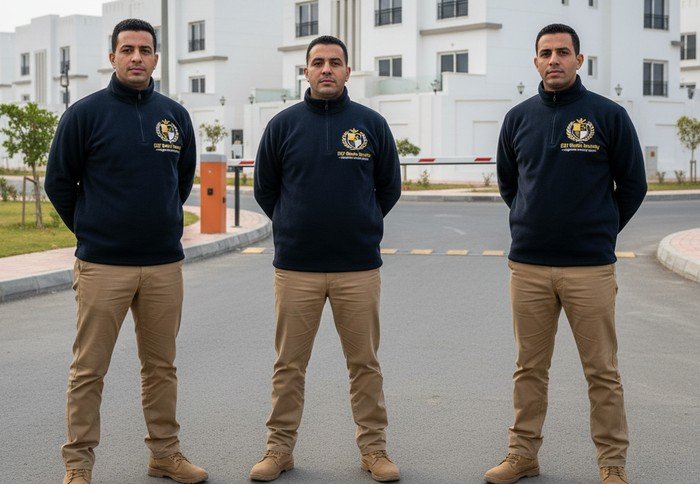
- Enhanced Physical Guarding: Static guards and mobile patrols for low-occupancy periods.
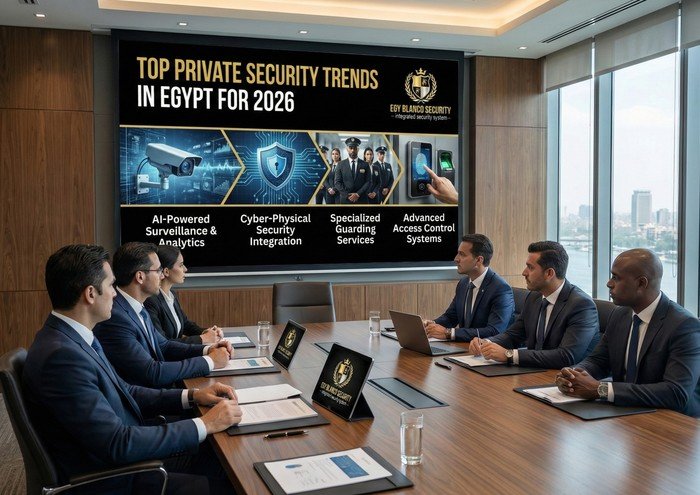
- AI-Powered Surveillance: CCTV systems with intelligent analytics for real-time threat detection.
- Advanced Access Control: Biometric and multi-factor systems to secure facilities.
- Cybersecurity Integration: Training programs and monitoring for remote workers.
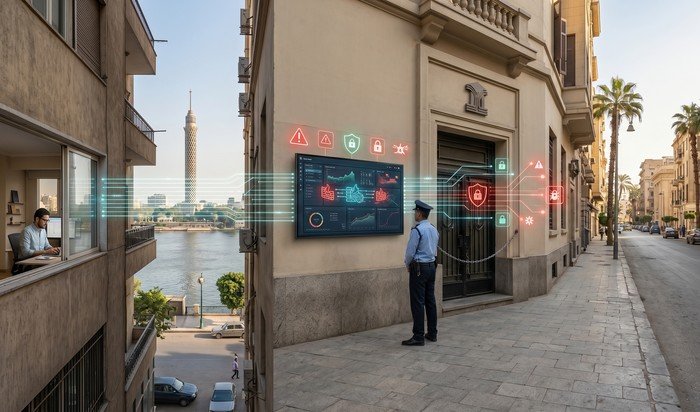
- Integrated Security Platforms: Unified management of physical and digital threats.
5. Best Practices for Companies Implementing Remote Work
• Adopt a Zero Trust security model
• Provide mandatory cybersecurity awareness training
• Increase on-site security presence on remote days
• Conduct regular risk assessments and audits
• Implement robust incident response protocols
Quick Security Checklist for Remote Work Days
- Assess and mitigate remote access vulnerabilities
- Strengthen endpoint protection and VPN usage
- Enhance physical perimeter security
- Monitor facilities 24/7 with professional teams
- Review insurance and compliance requirements
6. Long-Term Outlook and Strategic Recommendations
The Sunday remote work policy is likely to evolve. Companies that invest in hybrid security models today will be better positioned for future operational resilience. EGY Blanco Security recommends partnering with experienced providers to develop customized protection strategies that balance flexibility with robust risk management.
Conclusion: Turning Challenges into Opportunities
While the remote work policy presents new security considerations, it also creates opportunities to modernize protection approaches. With proactive planning and expert support, Egyptian businesses can maintain high security standards while embracing flexible work models.
Ready to strengthen your organization’s security in the era of hybrid work? Contact EGY Blanco Security today for a complimentary risk assessment and tailored protection plan.