In an unprecedented move toward energy conservation and traffic congestion reduction, the Egyptian government issued Ministerial Decree No. 982 of 2026 mandating Sunday remote work across numerous government entities and private sector companies during April and May 2026. While this policy carries clear economic and logistical benefits, it simultaneously introduces unprecedented security challenges for corporations and financial institutions operating in the Egyptian market. This comprehensive analysis from EGY Blanco Security – Egypt's leading private security company – examines the emerging physical and cyber risks and provides actionable strategies for maintaining robust corporate protection in the hybrid work era.
According to the Statista Cybersecurity Egypt 2026 Report, cyberattacks on Egyptian companies have surged by 34% since expanded remote work policies were implemented. The National Telecommunications Regulatory Authority (NTRA) has also reported a significant increase in breach attempts through unsecured VPN connections. These figures underscore the urgent need for integrated security strategies combining corporate physical guarding with advanced technical security solutions.
1. Regulatory Framework: Understanding Ministerial Decree No. 982 of 2026
Issued by the Prime Minister's Office, Ministerial Decree No. 982 of 2026 establishes a comprehensive regulatory framework mandating remote work on Sundays for eligible employees in telecommunications, financial services, marketing, real estate, and related administrative sectors. Banks continue normal branch operations for customer-facing services, while central administrative functions—HR, legal affairs, and IT departments—shift to remote mode. The policy has been extended through May 2026 following positive initial evaluations by the Central Bank of Egypt and relevant authorities. For deeper understanding of regulatory compliance requirements, consult our sensitive security operations management.
2. Risk Landscape: Physical and Cyber Threats on Remote Work Sundays
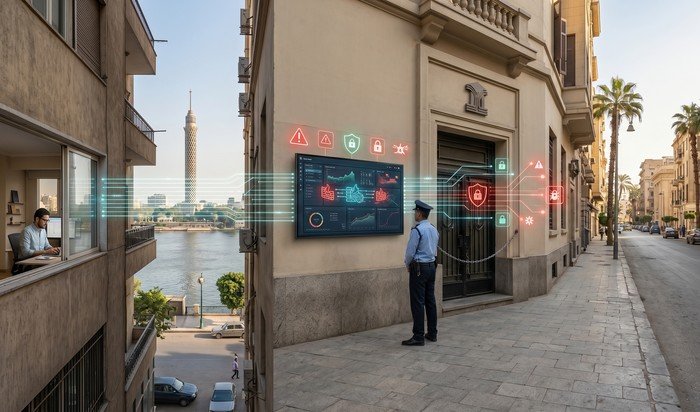
Reduced occupancy in administrative buildings and corporate headquarters on Sundays amplifies both physical and digital security threats simultaneously. According to the Security Industry Association (SIA), low-occupancy facilities face a 47% increase in physical breach risk compared to fully occupied buildings.
Physical Security Challenges
- Perimeter Vulnerability: Reduced occupancy makes buildings more attractive targets for unauthorized access, theft, and vandalism. Our mobile security patrols provide an effective solution for securing low-occupancy facilities.
- Surveillance Gaps: Fewer on-site personnel reduces natural human surveillance, extending the time to detect any suspicious activity.
- Shift Change Vulnerabilities: Weak points increase during guard shift transitions on low-density Sundays.
Cybersecurity Threats
- Unsecured Home Networks: 73% of Egyptian employees use home Wi-Fi networks without WPA3 encryption, facilitating Man-in-the-Middle attacks and data breaches, according to the Ministry of Communications and Information Technology.
- Phishing Escalation: A 65% surge in phishing attacks targeting remote workers using social engineering tactics exploiting home vulnerabilities.
- Weak Endpoint Protection: 58% of personal devices used for work lack essential endpoint security updates, creating entry points for malware and ransomware. For enhanced protection, see our advanced intrusion detection systems.
3. Banking Sector: Unique Risks in the Hybrid Environment
Egypt's banking sector—encompassing 38 registered banks and over 4,500 branches—represents the most sensitive element in the remote work equation. The Central Bank of Egypt's Cybersecurity Framework mandates multi-layered protection for sensitive banking data, even when accessed remotely by employees.
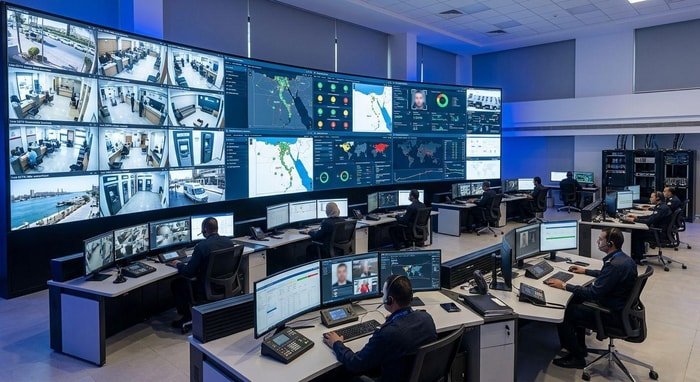
- Financial Data on Home Networks: Administrative staff accessing sensitive banking systems via unmonitored home connections increases financial data leakage risks.
- Identity & Access Management (IAM): Critical need for multi-factor authentication systems to prevent unauthorized access to central banking systems.
- Banking Zero Trust Model: Implementing "never trust, always verify" policies for continuous verification of every user and device before granting access to banking resources. Consult our bank security services for more.
4. Zero Trust Model: The Backbone of Remote Work Security
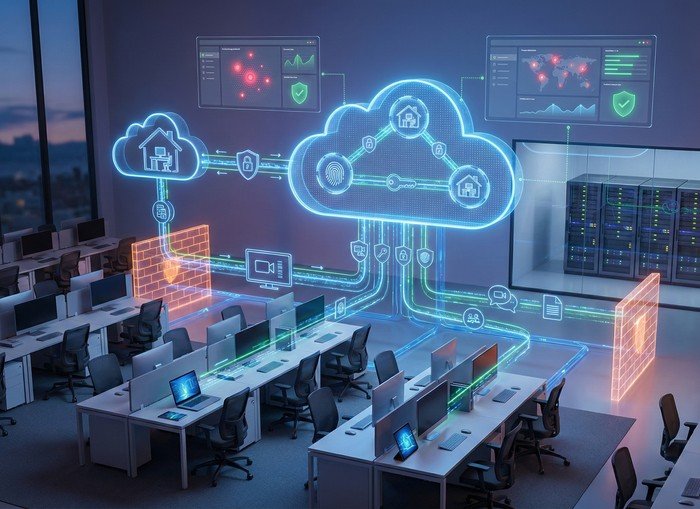
Remote work mandates the inevitable transition from traditional perimeter-based security models to Zero Trust architecture that assumes threats may already exist inside the network. According to the National Institute of Standards and Technology (NIST), Zero Trust organizations reduce data breach costs by 43% compared to traditional enterprises.
- Continuous Verification: Multi-factor authentication (MFA) for every remote work session, with automatic blocking of suspicious login attempts.
- Least Privilege Access: Restricting remote employees' permissions to the absolute minimum required to perform their job functions.
- Micro-Segmentation: Isolating sensitive systems to prevent lateral attack spread if a remote employee's device is compromised.
- AI-Powered Behavioral Monitoring: Intelligent surveillance systems that detect user behavioral anomalies and trigger instant alerts.
5. Endpoint Protection and Virtual Private Networks (VPN)
Endpoints—laptops, smartphones, and tablets—constitute the first and most dangerous line of defense in the remote work environment. Egyptian organizations must implement comprehensive endpoint security strategies including:
- Full Disk Encryption: Ensuring data remains unreadable even if devices are stolen.
- Automatic Updates: Deploying security patches and updates instantly across all connected devices.
- Mandatory VPN Connection: Enforcing AES-256 encrypted VPN usage for all corporate remote communications, preventing data interception.
- Strict BYOD Policies: Implementing mandatory security controls for personal device usage, with remote wipe capability for corporate data in case of loss.
6. Enhanced Physical Guarding: Protecting Low-Occupancy Facilities
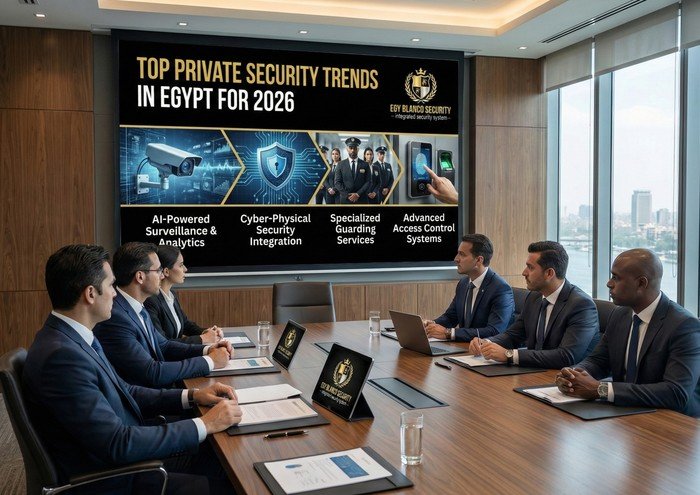
Commercial and banking buildings with low Sunday occupancy require an adaptive guarding strategy focused on visible deterrence, continuous monitoring, and rapid response. At EGY Blanco Security, we offer specialized solutions to address remote work day challenges:
- Additional Static Guards: Increasing static security guard presence at critical entry points on Sundays to enhance physical deterrence.
- Intensified Mobile Patrols: Scheduling additional mobile security patrols around facility perimeters during low-occupancy hours and off-peak times.
- AI-Powered Camera Monitoring: Activating AI surveillance camera systems with behavioral analytics for instant detection of unusual activity.
- Biometric Access Control: Restricting access to sensitive areas through biometric control systems with precise entry and exit logs.
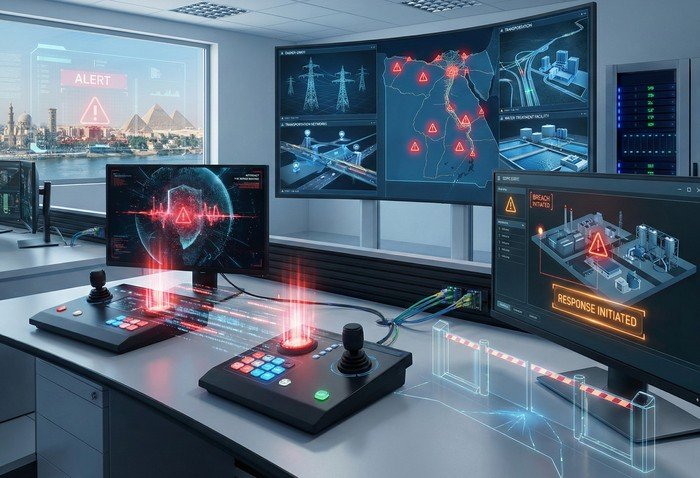
- Advanced Alarm Systems: Connecting intrusion detection systems to 24/7 monitoring centers for immediate response.
7. Employee Training: The Human Defense Line
Technology remains ineffective without adequate human awareness. According to the IBM Cost of a Data Breach Report 2025, human error was a contributing factor in 74% of security breaches. Egyptian organizations must implement:
- Mandatory Monthly Security Training: Phishing simulations and cyber awareness drills for all remote-working employees.
- Remote Work Security Handbook: Documenting clear security policies and procedures, readily accessible to all staff.
- Incident Response Hotline: Direct communication channel with internal security teams or security service provider for immediate incident reporting.
8. Remote Work Day Security Audit Checklist
Comprehensive Sunday Security Audit Checklist
- Activate Zero Trust policies for all remote users
- Verify VPN operation with AES-256 encryption protocols
- Scan and update endpoint protection on all devices
- Enforce multi-factor authentication (MFA)
- Increase static guards and mobile patrols on Sundays
- Test alarm systems and CCTV cameras before Sunday
- Review and restrict access privileges to minimum required
- Verify emergency response and communication plan readiness
9. Future Outlook: Beyond May 2026
Government indicators suggest the possibility of extending the Sunday remote work system or establishing it as permanent policy in certain sectors after the trial period ends in May 2026. Companies that invest today in integrated hybrid security infrastructure—combining professional physical guarding with advanced technical security systems—will be better positioned for future operational resilience. Gartner experts recommend that organizations allocate at least 15% of their security budgets to hybrid work strategies by end of 2026.
Conclusion: Transforming Security Challenges into Competitive Advantage
While Sunday remote work imposes unprecedented physical and cyber security challenges on Egyptian corporations and banks, it simultaneously presents a golden opportunity to modernize security infrastructure and adopt global best practices in corporate security. By combining Zero Trust strategies, endpoint protection, employee training, and enhanced physical guarding, Egyptian organizations can not only survive this transitional period but emerge stronger, more secure, and future-ready.
At EGY Blanco Security, we stand ready to help your organization navigate this new security landscape. From complimentary risk assessments to customized protection plans, our team of experts is prepared to ensure your business remains protected—whether your employees are in the office or working remotely.
Need integrated security solutions to protect your facilities during remote work days?
Request Now Consultation